Welcome to our store
Welcome to our store
Recipient Details
⚠️ Someone 21+ must be available to accept the order at time of delivery. .
Local delivery: A 21+ adult must be present to accept the order and have their ID scanned. If we can't reach the recipient or the ID scan fails, a $8.99 re-delivery fee applies.
Shipping: A 21+ adult must be present to sign. After 3 failed attempts or failed age verification, the order is returned and refunded minus original shipping, return shipping, and a $8.99 restocking fee.
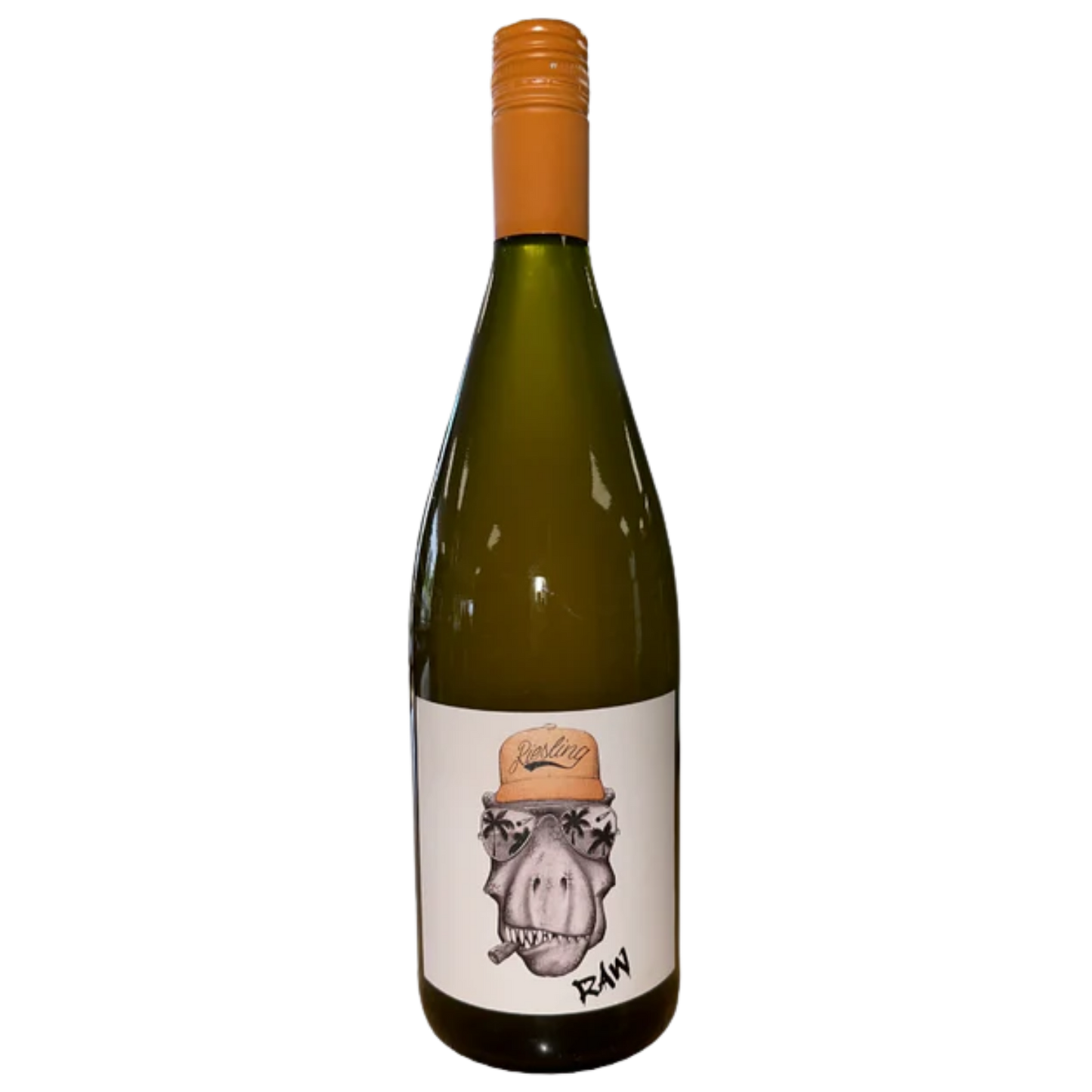
Strub Dino Raw Riesling 2024 is produced by Weingut J. & H. A. Strub in Nierstein, within Germany's Rheinhessen region — a historic winegrowing area defined by its position along the Rhine River and the diversity of its soils, which range from the iron-rich Rotliegenden red sandstone and slate of the Roter Hang slope to the limestone-rich parcels found across the broader appellation. The Strub family has produced Riesling in Nierstein since 1710, with Sebastian Strub now representing the twelfth generation. The Dino Raw is sourced from multiple vineyard sites across the appellation, with soils including limestone, and is farmed with a focus on transparency and minimal intervention.
True to its designation, the wine is produced with three days of skin contact on the Riesling fruit before fermentation proceeds in tank with the whole berries — a technique that introduces phenolic compounds and textural weight uncommon in conventional Rheinhessen Riesling. The wine is kept on full lees until March, a period of extended contact that adds body and a subtle autolytic character, before a single racking prior to bottling. The result is a skin-contact, or orange, expression of Riesling that sits outside the traditional parameters of the variety while remaining rooted in the terroir and grape character of Nierstein.
The palate opens with the variety's characteristic stone fruit and citrus peel, overlaid with the additional texture and savory depth that the skin contact and lees aging contribute. The acidity is precise and persistent — Riesling's defining structural trait — providing a backbone that carries the wine through a long, dry finish. The close is mineral and gently oxidative, with a faint grip from the skin-derived tannins and a lingering citrus note that ties the wine back to its Rheinhessen origin. The wine is bottled in a one-liter format, reflecting its position as an everyday expression of the estate's natural winemaking approach.
*Packaging may vary. Our suppliers occasionally update their packaging, labels, or bottle design without advance notice. The product you receive may look slightly different from the image shown — but it's always the same quality spirit inside.

We're committed to making sipsy.com accessible to everyone. If you experience any difficulty using our site or need assistance with an order, please email us at hello@sipsy.com. Our website aims to meet WCAG 2.1 Level AA accessibility standards.


