Welcome to our store
Welcome to our store
Recipient Details
⚠️ Someone 21+ must be available to accept the order at time of delivery. .
Local delivery: A 21+ adult must be present to accept the order and have their ID scanned. If we can't reach the recipient or the ID scan fails, a $8.99 re-delivery fee applies.
Shipping: A 21+ adult must be present to sign. After 3 failed attempts or failed age verification, the order is returned and refunded minus original shipping, return shipping, and a $8.99 restocking fee.
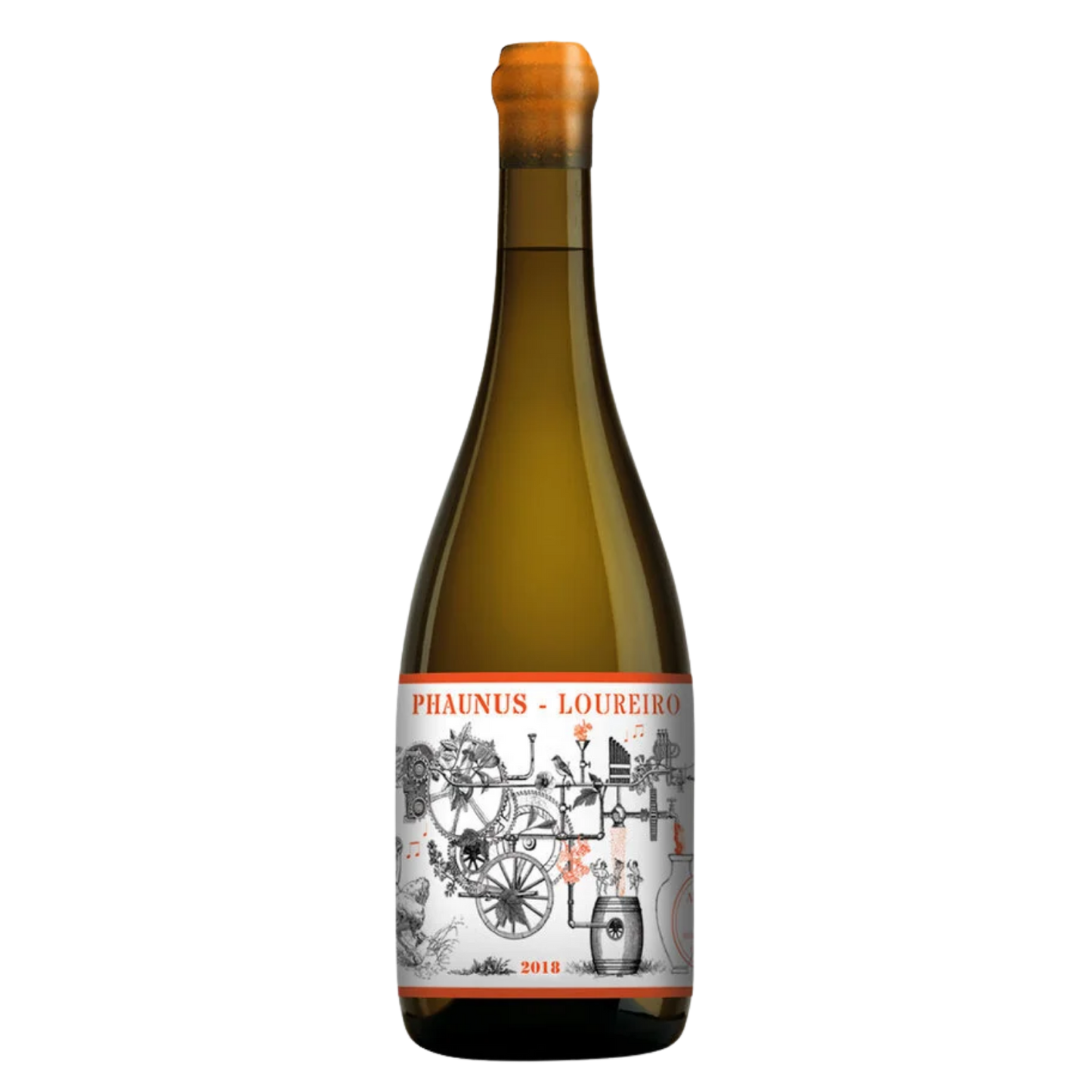
Aphros Phaunus Amphora Loureiro is produced by Vasco Croft at Aphros Wine in the Lima subregion of Vinho Verde, in Portugal's northwestern Minho — a region of granite-studded hillsides, abundant Atlantic rainfall, and a deep indigenous winemaking tradition centered on the Loureiro grape. Croft is a polymath who came to winemaking by way of architecture, pedagogy, and sculpture before reinventing himself as a vintner on his family's ancestral estate, where he has built one of Portugal's most philosophically rigorous biodynamic operations from the ground up. The estate is farmed to Demeter and Biodyvin biodynamic certification, with harvests conducted by hand in alignment with lunar cycles, and the surrounding land managed as a living ecosystem of ancient trees, forest, and wild animals in accordance with permaculture principles. The winery itself operates without electricity — a commitment that shapes every element of the production process and forces a pace and intentionality that industrial winemaking by definition cannot replicate. Phaunus is Aphros' most experimental range, reserved for skin-contact, ancestral sparkling, and amphora-aged expressions that push the estate's philosophy to its furthest expression.
The 100% Loureiro fruit is harvested by hand, then de-stemmed and pressed using hand power alone before being transferred to large clay amphorae — talhas, the traditional clay vessels of the Alentejo — lined on the interior with beeswax sourced from the estate's own beehives. The must ferments spontaneously on the skins inside the beeswax-lined clay for approximately six to seven months, a maceration period of uncommon duration that extracts considerable phenolic depth, color, and the textural weight that distinguishes this expression from conventional Vinho Verde white wine production entirely. The wine is then bottled without filtration, preserving its natural turbidity and the full spectrum of compounds developed during the extended amphora fermentation. The beeswax lining — an ancient vessel-sealing practice — prevents the clay from imparting its own mineral character directly to the wine while allowing a subtle micro-oxidative exchange through the porous vessel walls that contributes to the wine's distinctive aromatic development over the months in contact with the skin and clay environment.
The wine pours a slightly cloudy amber — the color a direct record of the skin contact and the beeswax-lined clay environment. The nose is alive and complex, opening with apricot oil, elderflower, marmalade, and tangerine peel alongside a honeyed beeswax quality that is entirely specific to this production method and this vessel. The palate is tightly structured and vibrant, with a pithy, nervy grip from the extended skin contact that James Suckling described as "salty and textured, driven by bright, linear acidity" — a characterization that captures the tension between the Loureiro's natural freshness and the phenolic weight the amphora maceration has built into the wine's architecture. The finish is long and warming, closing on honeycomb, citrus pith, and a mineral persistence that reflects the granite soils of the Lima subregion. Surprisingly concentrated at 11% ABV — a wine shaped by process and philosophy as much as by grape and place.
*Packaging may vary. Our suppliers occasionally update their packaging, labels, or bottle design without advance notice. The product you receive may look slightly different from the image shown — but it's always the same quality spirit inside.

We're committed to making sipsy.com accessible to everyone. If you experience any difficulty using our site or need assistance with an order, please email us at hello@sipsy.com. Our website aims to meet WCAG 2.1 Level AA accessibility standards.


